P5 Maths · bar models
Maths Model Lab
Bar models, one small step at a time. Your child draws on a blank sheet, just like the exam. Then the Lab shows a worked model, step by step, and asks: does your sheet have this?
Free, on your That Science Thingy account. Sign in and the Model Lab opens straight away.
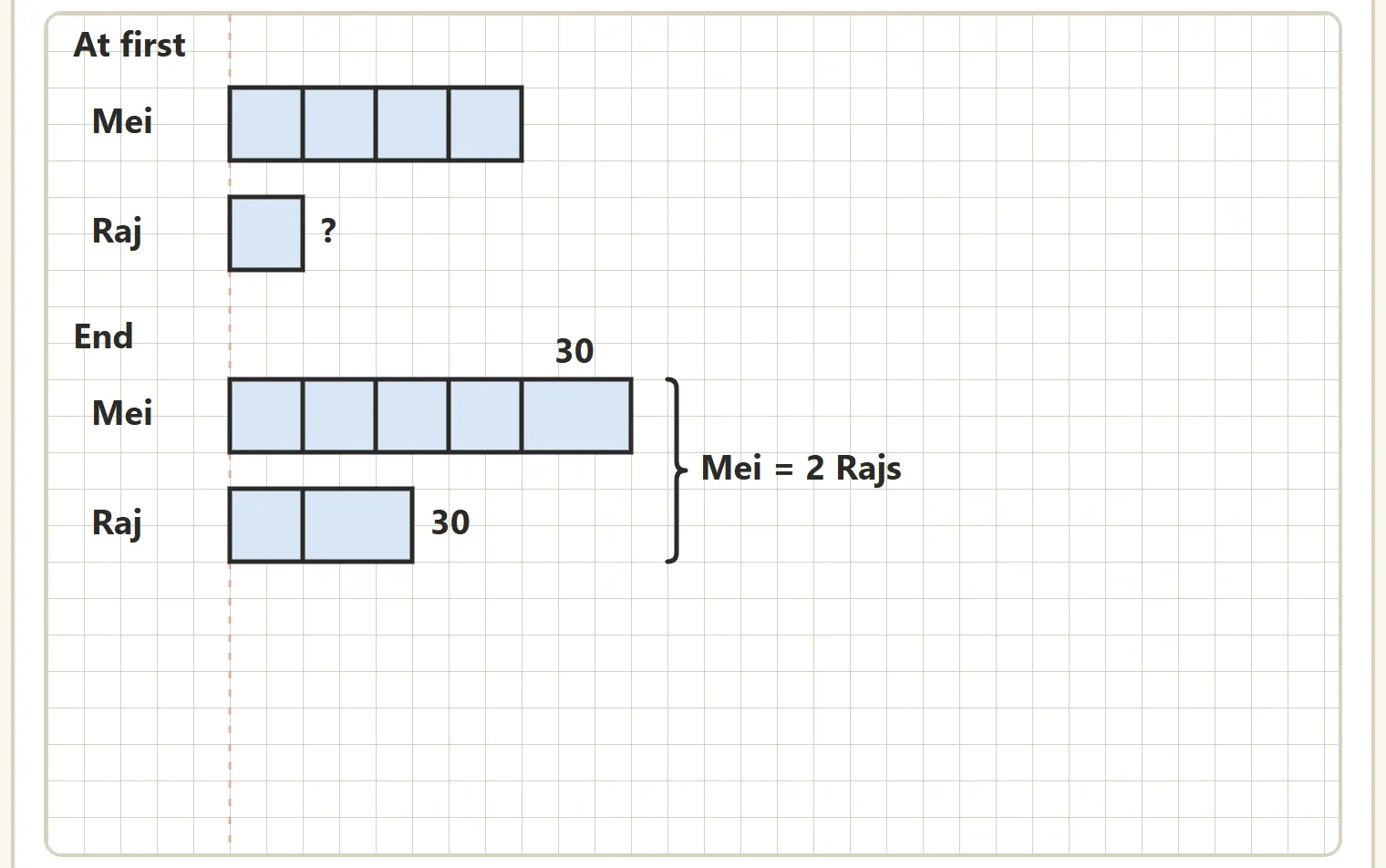
The hardest part is the first line.
- A blank sheet, like the exam
- Draw with a finger or a mouse. A wobbly box tidies itself into a neat bar. A line cuts it into units. A curve becomes a bracket.
- Picture first, sums last
- Stories turn into bars before any numbers. Children see why “the total stays the same” before they meet it in a question.
- Compare, step by step
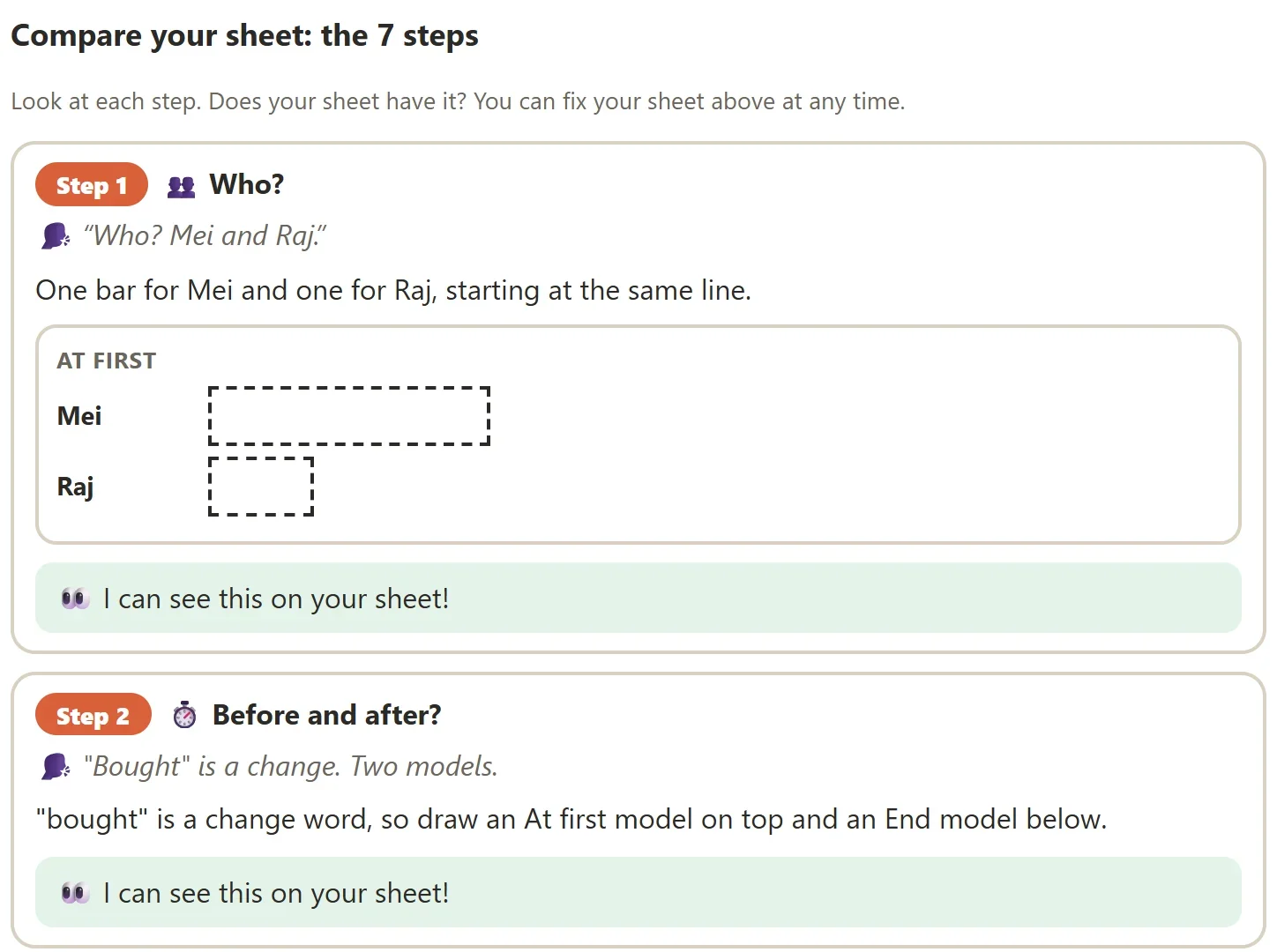
- After drawing, the worked model appears as Step 1, Step 2 and so on. Steps the Lab can already see on the sheet are ticked for them.
- No red crosses
- A step that is not there yet says “not yet”, and the child can fix the sheet straight away.
The 7 Model Steps
The same routine for every bar-model question, each step one small action.
1. Who?
One bar for each person, all starting at the same line.
2. Before and after?
A change word, like gave, spent or bought? Then draw an At first model and an End model.
3. One sentence, one drawing
Read one sentence. Draw only that. No sums yet.
4. What stayed the same?
The total, the gap, one person, or nothing? Keep that part the same.
5. Put the ?
Whose bar, and when? One bar, or all of them together?
6. Find 1 unit
Three short lines: units = number, 1 unit, then the answer.
7. Check in the story
Put the answer back into every sentence.
Five short stations, from seeing to drawing alone
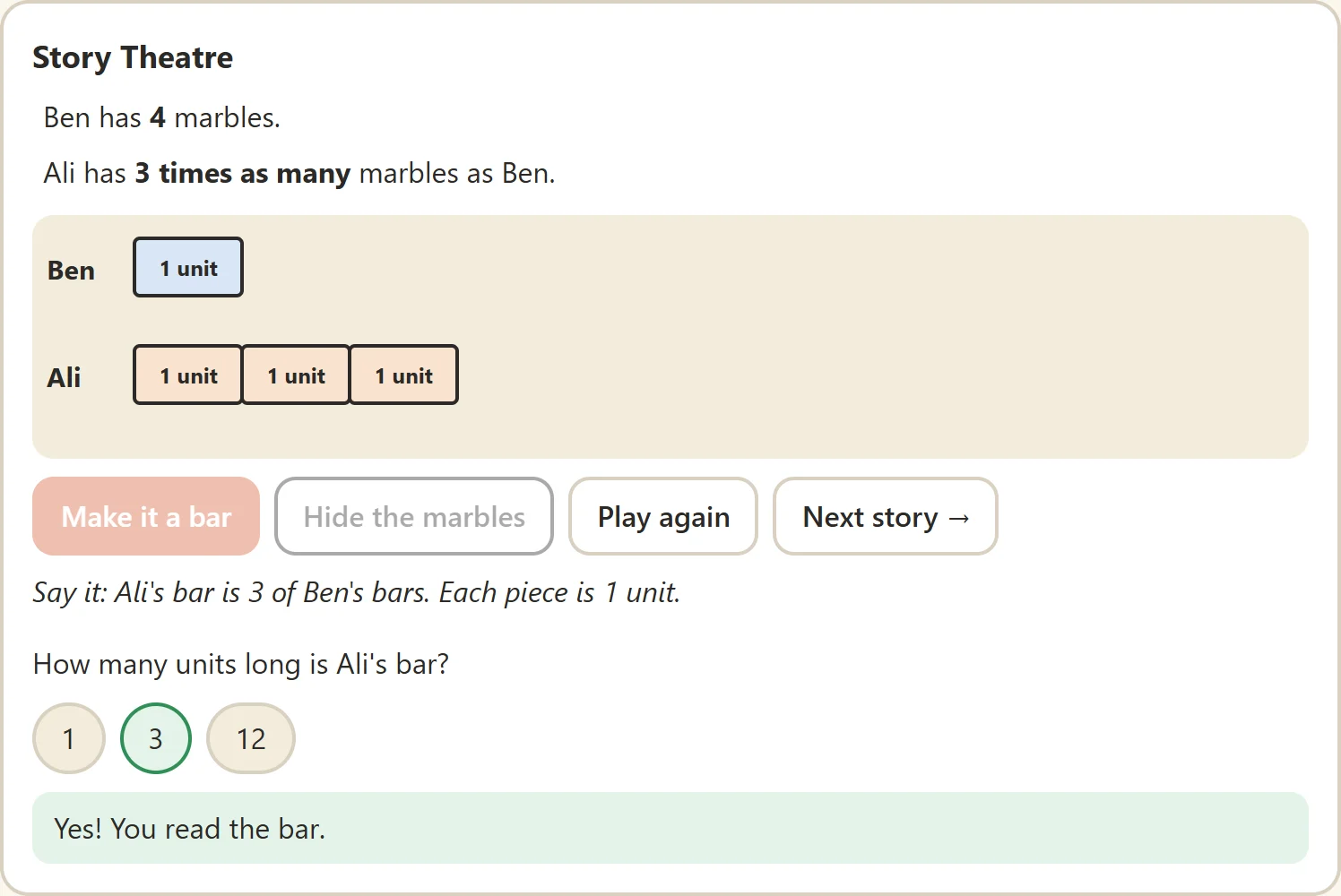
- Story Theatre: real things slide together into a bar.
- Sandbox: give, spend and add, and watch what stays the same.
- Bar Builder: make one sentence into bars of the right length.
- Finish the Model: help that steps back, from watch to your turn.
- Blank Sheet: the real thing, drawn alone, then compared.
For parents
The Model Lab uses the same login as the rest of the site. On a parent account it first asks who’s doing maths today, so your child plays on their own card.
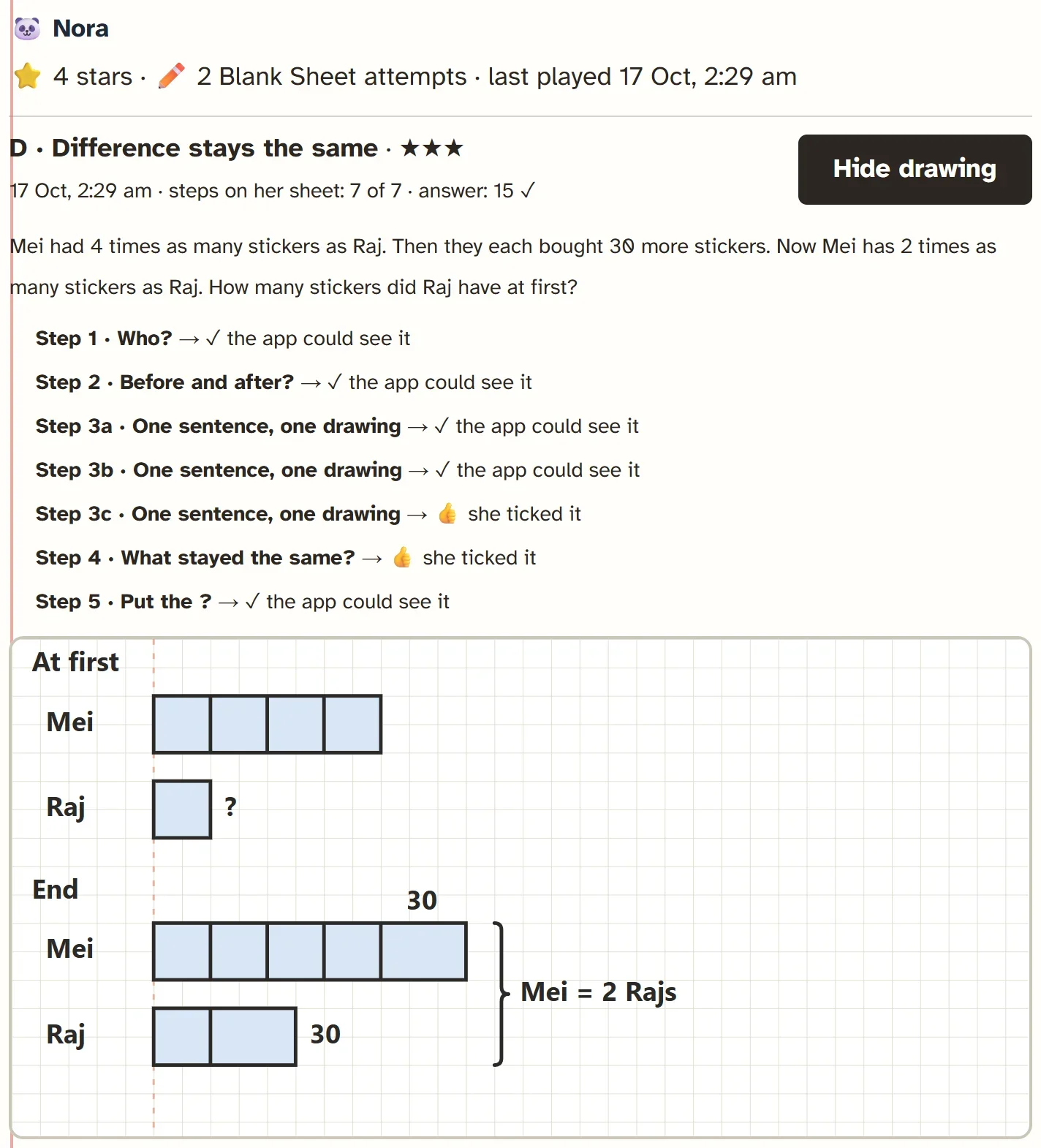
Your parent dashboard then shows their stars, each Blank Sheet attempt, the step they most often mark “not yet”, and the drawing itself.